- scrc.us.com
- Compare
- P1 vs UP600
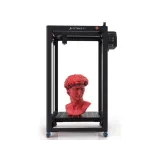
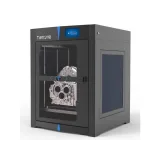
Optimus P1 vs Tiertime UP600
What P1 does better (6) and where UP600 wins (1) — every spec side by side.
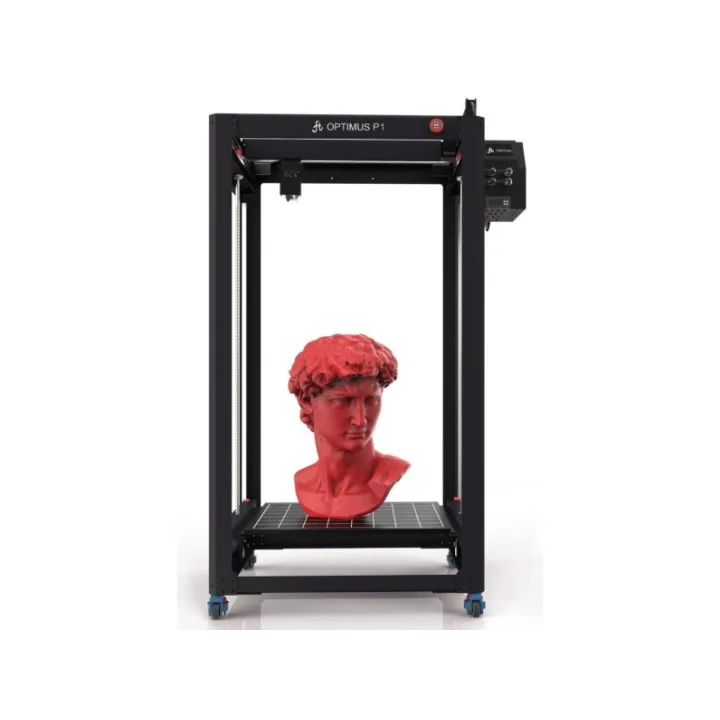
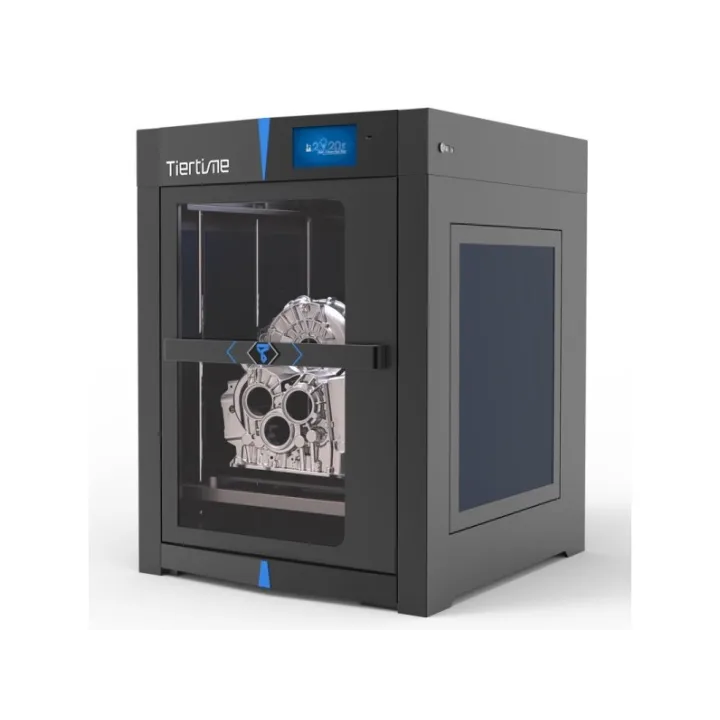
Why is P1 better than UP600?
- Build volume396 L vs 120 L3.3×
- Finest layer height0.05 mm vs 0.1 mm2×
- Build height (Z)1,100 mm vs 600 mm+83%
- Weight55 kg vs 120 kg2.2×
- Build depth (Y)600 mm vs 400 mm+50%
- Build width (X)600 mm vs 500 mm+20%
Why is UP600 better than P1?
- Screen size3.5″ vs 7″2×
Specifications
Side by side
| General | ||
| Technology | FDM / FFF (filament) | FDM / FFF (filament) |
| Delivered as | Fully assembled | Fully assembled |
| Build volume | ||
| Build width (X) | 600 mm | 500 mm |
| Build depth (Y) | 600 mm | 400 mm |
| Build height (Z) | 1,100 mm | 600 mm |
| Build volume | 396 L | 120 L |
| Print quality | ||
| Finest layer height | 0.05 mm | 0.1 mm |
| Thickest layer height | — | 0.4 mm |
| Extruder & hotend | ||
| Max nozzle temperature | — | 300 °C |
| Direct-drive extruder | Yes | — |
| Default nozzle | — | 0.4 mm |
| Supported nozzle sizes (mm) | — | 0.4, 0.5, 0.6, 0.8 |
| Filament diameter | — | 1.75 mm |
| Supported materials | PLA, ABS, Wood PLA, Rubber, Flex (TPU), PETG. | — |
| Number of supported materials | 6 | — |
| Engineering materials (PA, PC, CF) | No | — |
| Print bed | ||
| Heated bed | Yes | — |
| Max bed temperature | 100 °C | — |
| Enclosure | ||
| Enclosed build chamber | No | — |
| Connectivity & control | ||
| Connectivity | USB, SD card | Wi-Fi, Ethernet, USB |
| Wi-Fi | — | Yes |
| Ethernet | — | Yes |
| USB | Yes | Yes |
| SD card | Yes | — |
| Screen size | 3.5″ | 7″ |
| Touchscreen | Yes | Yes |
| Size & power | ||
| Width | — | 780 mm |
| Depth | — | 1,150 mm |
| Height | — | 850 mm |
| Weight | 55 kg | 120 kg |